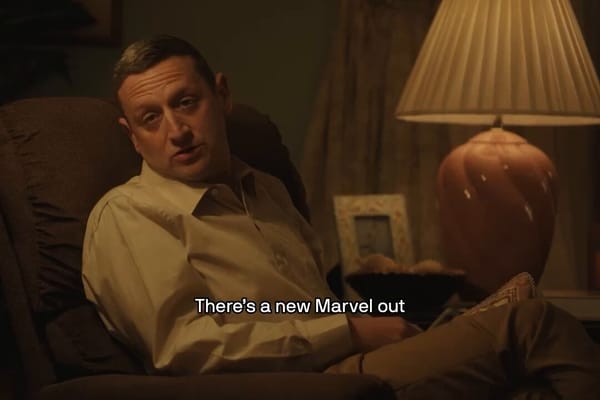
Seriously though, won't someone PLEASE think of the children

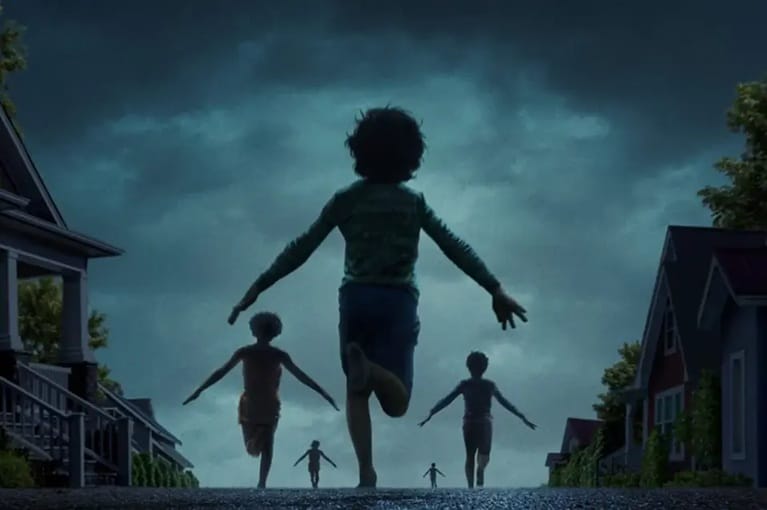
Content warning: this article discusses child abuse, in real life and as a theme in art. It also contains spoilers for a number of recent films: Eddington, Bugonia, Nickel Boys, Weapons, Bring Her Back and 28 Years Later.
I used to think there was something gauche and unserious about accusing your political enemies of child abuse.
As I've gotten older, it's become harder to ignore the way our society and many of its most powerful members treat children. Maligned conspiracy theories like QAnon and Pizzagate posit that the world is ruled by a cabal of powerful pedophiles. As absurd and reactionary as these ideas are, like many conspiracy theories, they stem from the very true idea that there is something deeply wrong with the world.
The idea that Epstein-bff Donald Trump is somehow the defender of abused kids may be laughable but QAnon was right about one thing: the power our political elites enjoy relies on the imiseration of children.
That our society is set up in a way to intentionally harm children is not even a particularly novel idea. One of the most potent tools of colonialism is kidnapping Indigenous children and raising them in a way that is disconnected from their culture, communities and language. The patriarchy sustains itself by imbuing toxic ideas about sex and gender in younger people. Unregulated capitalism always defaults to child labour in its quest for a more exploitable workforce.
A society that sustains itself on the suffering of children is a potent metaphor in speculative fiction: from Ursula Le Guin's The Ones Who Walk Away from Omelas to Bong Joon-ho's Snowpiercer. But this isn't just a metaphor. One thing I've really appreciated about Aaron Smale's ongoing reporting on the abuse of children in New Zealand state and religious care is that he refuses to treat the reality as an abstract. He is clear-eyed in identifying the State itself as the abuser:
Why is it that the Crown can commit crimes against hundreds of thousands of children in its custody and suddenly politicians are mute about harsher penalties? Individuals that commit multiple rapes or serious violence against children get years in jail. But an institution that is responsible for thousands of such crimes and the cover-up of those crimes and the individuals who were involved face no significant consequences.
This truth may be deeply uncomfortable, but more and more people are acknowledging it (and not just right-wing cranks).
The relationship between child abuse and the society that allows (or requires) it to happen is one that has surfaced again and again in films released this year.

If you look deep enough through Eddington's mean-spirited exterior, you might eventually find a beating heart. Ari Aster's most recent film is an exploration of the deluded ways that people respond to feeling politically helpless and the destruction of any sense of shared truth. But there is a truth beneath it all, even if it becomes warped when refracted through its characters. The solutions being bullshit don't make the problems any less real.
Sheriff Joe Cross (Joaquin Phoenix) is debilitated by COVID, whether or not he accepts the science. Police violence against Black people is real, even if the youth of Eddington jump on the BLM bandwagon for clout. Regardless of how Mayor Ted Garcia (Pedro Pascal) frames it, the data centre is a stupid idea.
It is not completely unreasonable then to take cult-leader Vernon Jefferson Peak (Austin Butler) at his word when he talks about the horrific abuse he endured as a child.
As with QAnon (a clear point of reference for Aster), an underlying truth is used as a jumping-off point for a series of lies. Vernon uses his trauma as the foundational doctrine of his cult and convinces Joe's wife Louise (Emma Stone) to join. Furious about being cuckolded, Joe accuses his rival Ted of sexually assaulting Louise. In Eddington, the real harm is quickly forgotten and becomes ammunition in petty feuds between political enemies.
In the real world, a horrific child-trafficking ring becomes a political football for the President's allies and enemies alike, a meme instead of evidence of a broken society that destroys real people.
Emma Stone's other big role this year was in Yorgos Lanthimos' Bugonia, a film that also draws a connection between child abuse and conspiracy theories.
A remake of Jang Joon-hwan's excellent 2003 film Save the Green Planet, Bugonia stays relatively faithful to the major plot beats of the original while bringing it into the epistemological crisis of 2020s America. Jesse Plemons and Aidan Delbis play two men who kidnap a pharmaceutical CEO (Stone) who they suspect of being an alien.
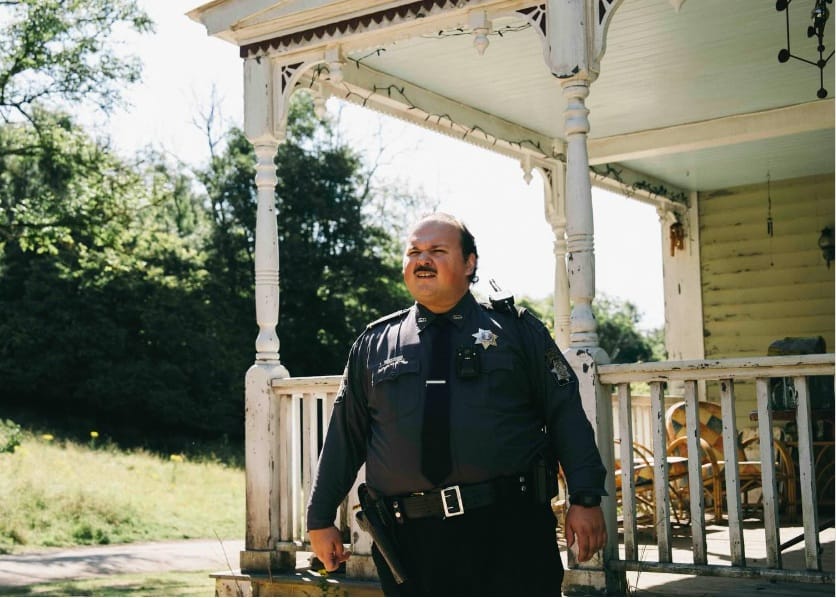
As in the original film, their conspiracy theory turns out to be 100% correct but they are powerless to do anything about it. A key detail that screenwriter Will Tracey adds is that Plemons' character Teddy is a survivor of abuse at the hands of his childhood babysitter, a police officer played by Stavros Halkias. When the avatar of state power is an abuser, it's no wonder Teddy grows to distrust authority.

Eddington and Bugonia are two of the most of-their-moment 2025 films, pitch-dark comedies from divisive provocateurs where characters' childhood abuse instills in them a conspiratorial instinct. Both Aster and Lanthimos choose to humour this instinct, following the thread, even when it takes them into the realm of fantasy.
RaMell Ross' Nickel Boys brings a much more grounded approach to the same topic. Although it's technically a 2024 film, it barely got a cinema release in New Zealand so I'm including it here. Adapted from Colson Whitehead's 2019 novel about a segregated boys' school in 1960s Florida, Ross takes a radical approach to relatively straightforward source material.
The film mostly comprises shots from the point-of-view of Elwood (Ethan Cole Sharp) and Turner (Brandon Wilson), two Black kids who end up in State care at Nickel Academy. Being tethered to such a limited perspective immerses the audience in the horror (and occasional beauty) of these boys' lives. Even in its specificity, it should not be lost on viewers that Nickel (a fictional school that Whitehead based on Dozier School for Boys) is not too different from countless institutions in America, Australia, the UK and Aotearoa.
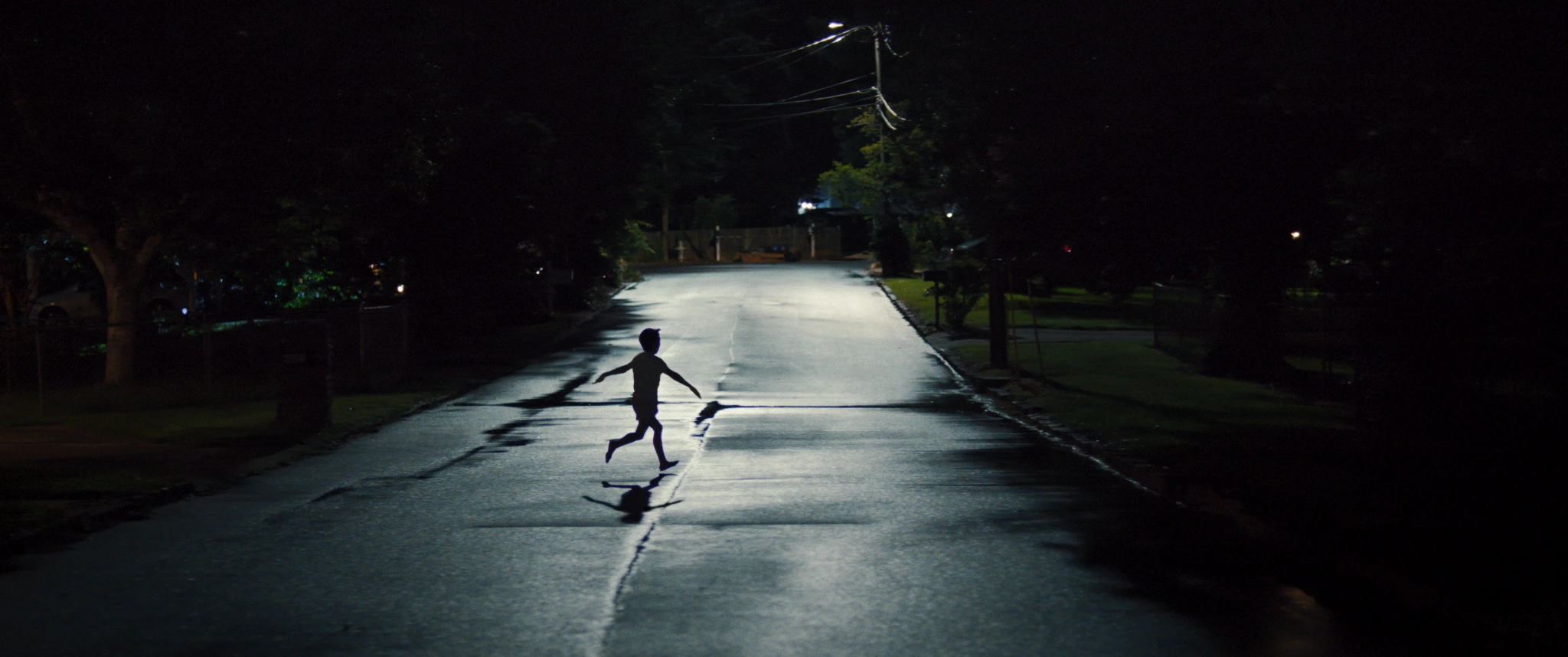
One of the most talked-about American films this year also deals with large groups of children being separated from their families.
In Weapons, Zach Cregger's second feature after Barbarian, a town is thrown into turmoil when a classroom of children disappears in the middle of the night. As in his previous film, Cregger's high-concept premise, cute narrative structure and comedic moments get him most of the way, but he eventually feels the need to limit its thematic resonance by explaining everything (a witch did it).
Weapons is a lot of fun but Cregger's refusal to sit in his own discomfort makes it the weakest of these films.
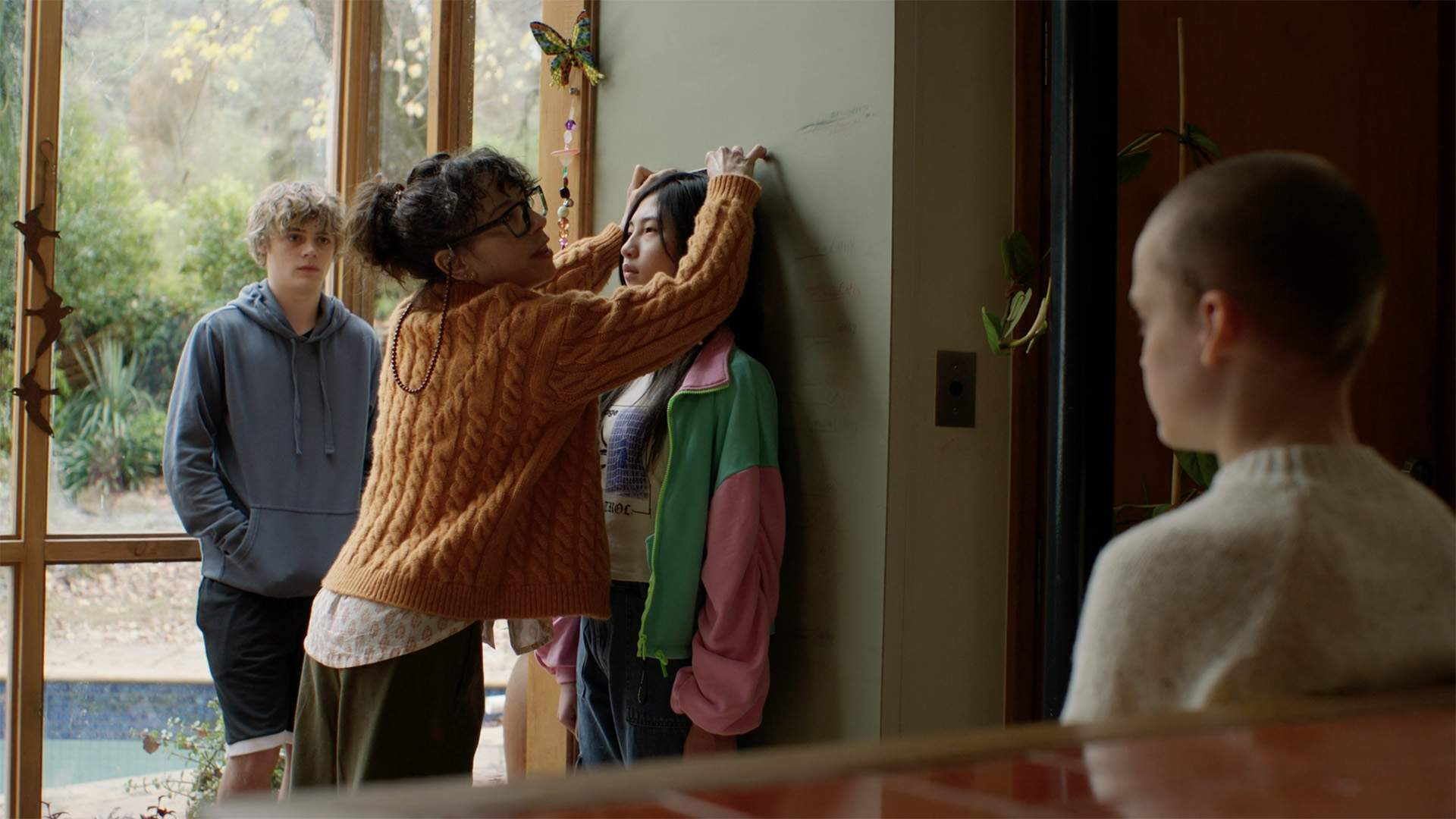
At the other end of the horror spectrum is Bring Her Back from Adelaide sickos Danny and Michael Philippou. The Philippous' first film Talk To Me was upsetting enough but here they up the ante considerably.
When stepsiblings Andy (Billy Barratt) and Piper (Sora Wong) lose their father in an accident, they end up in the care of Laura (Sally Hawkins). Hawkins has always been one of my faves but here she is utterly terrifying. All of Laura's attention and affection is laser-focused on Piper while Andy, along with Laura's other foster child Oliver (Jonah Wren Phillips) is completely neglected. It turns out that Laura has devious plans for Piper and Andy is surplus to requirements.
The thing that makes the Philippous films work so well is even in their unrelenting nastiness, they are earnestly on the side of the kids in peril. Neither film explicitly talks about racism but both centre on a teenage girl of colour and surround her with white Aussies, an effective shortcut to getting the audience onside.
There's nothing thematically groundbreaking about Bring Her Back but the sense of menace created by Hawkins' foster mother from hell is so much more tangible than Weapons' goofy-ass witch.
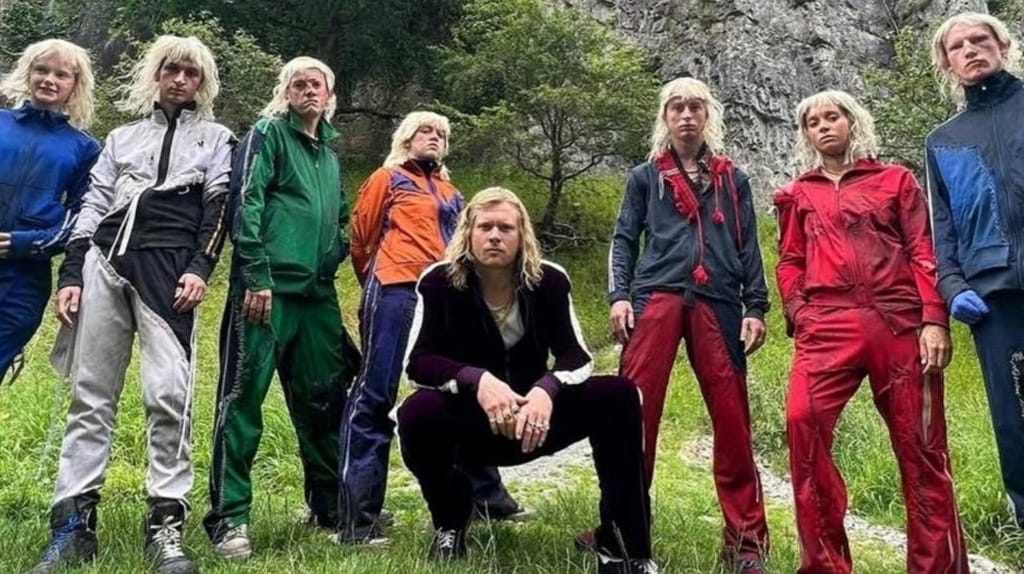
Finally, no film better conveys the way the child abuse of the past haunts the present than 28 Years Later.
The long-delayed sequel to the turn-of-the-century British zombie duology does not feature child abuse as prominently as any of the above films, other than the residual abuse of growing up in England.
I've hated the last few films that Alex Garland has written but, credit where credit is due, director Danny Boyle can elevate the hell out of the dumbest script (and there are plenty of Garland clankers here).
The conceit is that the zombie virus of the first two films has frozen Britain in time, quarantined from a mainland Europe where history has kept going. A dystopia trapped in early-2000s England is a brilliant artistic choice for a number of reasons and not just because it's a time when Garland and Boyle were still regularly making good films. You can project any theme you like onto this: whether it's Brexit, mad cow disease or TERF Island, you can't deny that England is gross and should be contained.
It's not even exclusively a Blair-era period piece (although this does make it a great companion to Adam Curtis' Shifty). When England is cut off from the future, it starts receding into its own past. Some of the best moments of the film are its forays into nativist folk horror. While the American zombies in Dawn of the Dead were compelled to the mall through sheer muscle memory, in 28 Years Later they swarm a castle and start beating mud with sticks Monty Python and the Holy Grail style. The English have condemned themselves to feudalism.
But the most controversial moment in the film is its ending, where protagonist Spike (Alfie Williams) encounters a gang of tracksuit-wearing thugs, each with the same disgusting long blonde hair. This is 'the cult of Jimmys', a post-apocalyptic force of young men who have modelled themselves after famous pedophile Jimmy Saville. If English history stopped in 2002, Saville's crimes would have never been revealed but the gang serves as a potent symbol of a society that wants to wallow in its own past without ever reckoning with it.
I've been surprised with how many films this year have grappled with (or alluded to) such a fraught theme. As upsetting as many of these movies are, it'd be easy to convince oneself that they signal a reckoning; it's certainly in the zeitgeist, even if it's just as a meme or political football.
But without genuine structural change and accountability, we risk dooming ourselves to more stolen generations, more QAnon and more gangs of Jimmys operating under the protection of the state.